Adi-Kavya | Raja Ravi Varma’s Ramayan Oleographs
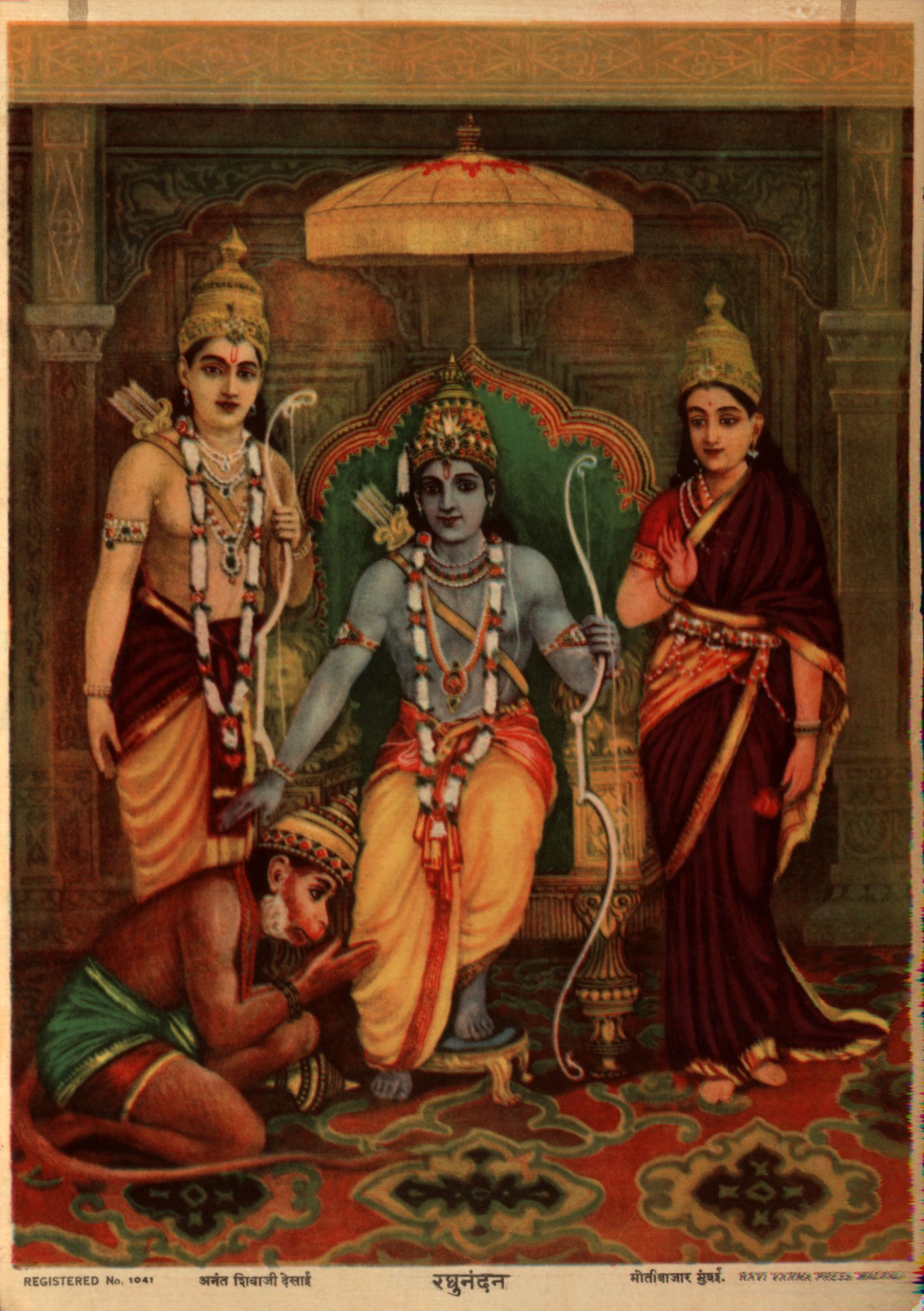
RRV134, Adi-Kavya, 10 x 14 in, Oleographs on Paper
Raja Ravi Varma (1848 – 1906) remains one of the most influential figures in shaping how Indian civilization visualised its sacred narratives. Through his paintings and, crucially, through the oleographs produced at the historic Ravi Varma Press, divine imagery moved beyond elite spaces and entered everyday life. These images were not confined to galleries or courts. They travelled into homes, prayer rooms, public spaces, and collective imagination.
For several generations, these images have lived not only on walls, but within daily life. People have worshipped these oleographs in their homes, offered prayers before them, and passed them down as sacred inheritances. To be part of everyday devotion across generations is perhaps the highest contribution an artist can make to society, where art becomes belief, memory, and moral grounding.
Among his most valued contributions is his visual engagement with the Ramayan, approached as a continuous civilizational flow. Seen together, these oleographs form a visual Adi-Kavya, the primal epic unfolding across time, geography, and belief. They begin with the cosmic source, Shri Vishnu and the Dashavatar, establishing the moral foundation of dharma. From there, the narrative moves seamlessly through King Dashrath, Shri Ram Janam, and pivotal episodes such as Ravan Kailash Andolan and Parshuram Yuddh, where power, ego, and restraint collide.
As the story advances, moments of sacrifice and devotion come to the fore. Jatayudh speaks of duty beyond victory. Angad Shishtai reflects diplomacy and moral resolve. Sankat Mochan Hanuman embodies selfless action. Iconic images such as Hanuman carrying Sanjivani, Ram and Lakshman borne on Hanuman’s shoulder, and Bharat Bhet reveal loyalty, love, and renunciation without theatrical excess.
The epic finds fulfilment in images of order and return. Lord Ram and Ma Sita seated in Hanuman’s heart, Ram Panchatan, Ram Abhishek, Raghunandan, and finally Ram, Lav, and Kush restore balance, lineage, and continuity.
Together, these oleographs are not mere illustrations. They are a complete visual Ramayan, carrying faith, kingship, devotion, and dharma into Indian hearts worldwide, taking the Adi-Kavya beyond boundaries and into the lives of people through widely loved and enduring images.
Photos and Text © Chaitya Dhanvi Shah