Mahasetu by Harshil Patel
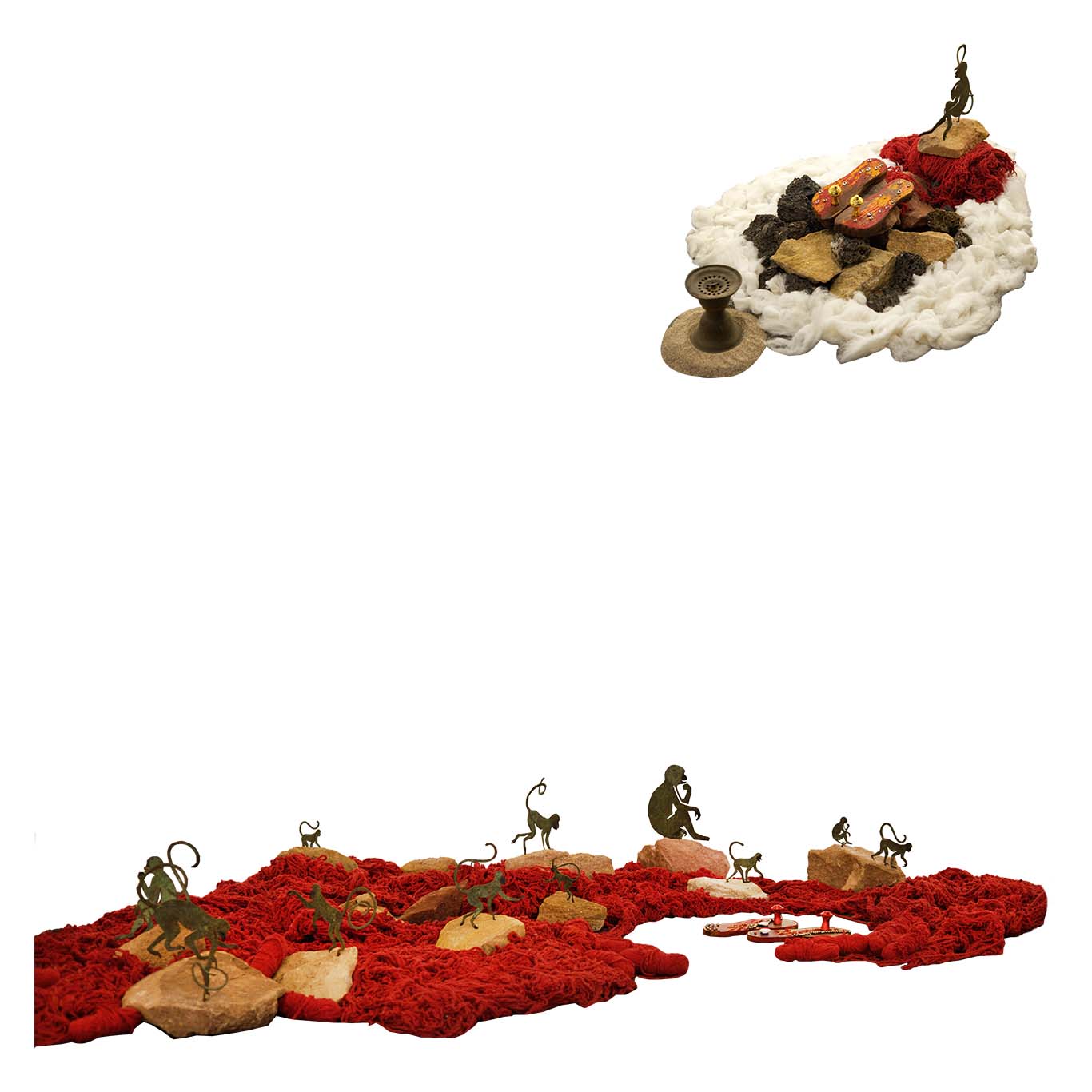
23179, Mahā Setu, 61 ft, Natural Stone, Sea Sand, Nada-chhadi, Cotton & Metal, 2025
Mahasetu by Harshil Patel (B. 1982) gives you a very international, site specific installation feel. It functions like a museum artwork, visually aesthetic yet educational, and it also raises larger issues in a stylish and sleek manner. The work uses natural stones, the religious red nada chadi, real sea sand, cotton, and metal monkeys, creating a language of materials that feels grounded and real. Above all, the padukas become the central symbol. They stand for Lord Ram’s footsteps, not only as a sacred sign but also as a guiding principle to follow his path of dharma and imbibe his gunas in daily life.
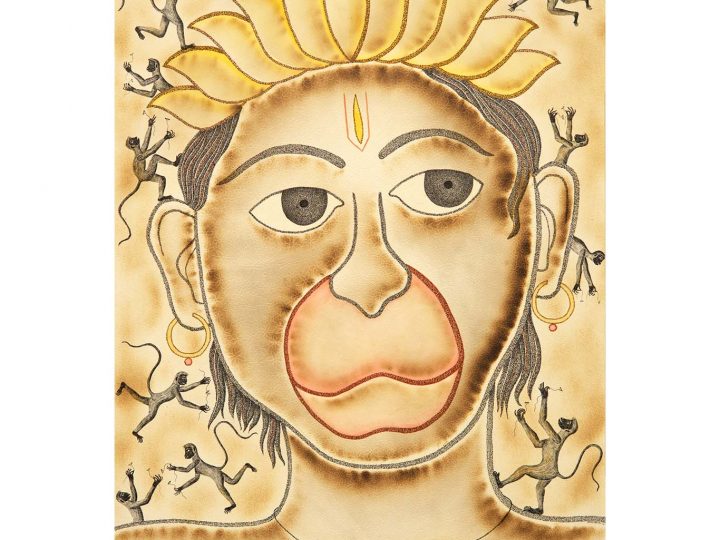
The way Harshil presents the island of Lanka, where Maa Sita’s paduka are placed, becomes a direct statement about ethics, right conduct, and the dignity of a woman. The entire Mahasetu gives you the experience of what a human being should stand for so that good wins over bad. It carries the weight of vanvaas and the Lanka war, where Lord Ram fought to bring Maa Sita back, as a stand against injustice and evil. It also connects to present-day inequality and unethical actions, showing how one must resist them. Hanuman ji stands as protector, and the Vanar Sena reflects how people must support one another, trusting that the universe supports the righteous. This sixty feet journey is immersive, realistic, and accessible, making you feel part of the Mahasetu and the larger philosophy of the Ramayan.
Photos and Text © Chaitya Dhanvi Shah